
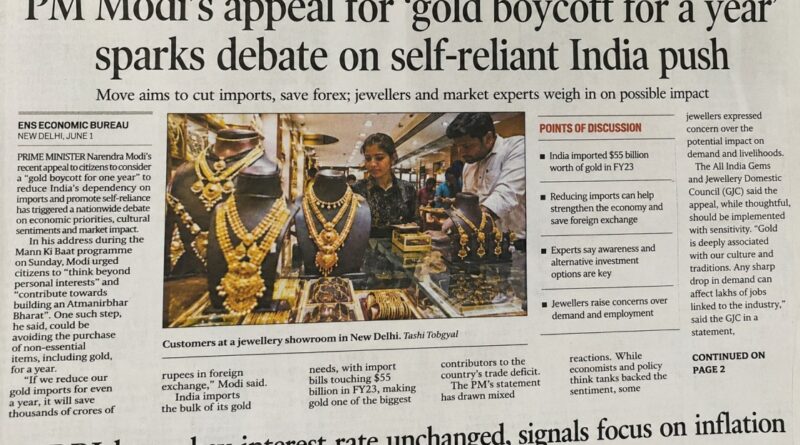
PM Modi’s Message Really Means for India
Gold has always held a special place in Indian households. From weddings and festivals to savings and investments, the yellow metal is deeply connected to Indian culture and emotions. But recently, discussions around a possible “gold boycott for one year” gained attention after Prime Minister Narendra Modi spoke about reducing dependency on imported goods and encouraging economic self-reliance.
While there has been no official nationwide ban or boycott announced on gold purchases, the conversation has sparked debate among citizens, economists, traders, and investors across the country.
Why Is Gold So Important in India?
India is one of the world’s largest consumers of gold. Families often buy gold not only for jewelry but also as a long-term financial security asset. During weddings, festivals like Diwali and Akshaya Tritiya, and religious occasions, gold purchases rise significantly.
However, India imports a major portion of its gold from other countries. This increases pressure on foreign exchange reserves and impacts the country’s trade balance. Over the years, governments have encouraged citizens to explore alternative investments and support domestic economic growth.
PM Modi’s Message and the Bigger Economic Picture
Prime Minister Modi has repeatedly emphasized the importance of becoming “Aatmanirbhar Bharat” (self-reliant India). His speeches often focus on reducing unnecessary imports, strengthening local industries, and improving India’s economic independence.
The recent discussions around reducing gold consumption appear connected to this broader vision. Economists believe that if gold imports decrease even for a limited period, India could potentially save billions in foreign exchange and redirect investments toward productive sectors such as:
-
infrastructure,
-
startups,
-
manufacturing,
-
and digital innovation.
Many financial experts also argue that excessive investment in physical gold locks household savings into non-productive assets instead of contributing to business growth or economic expansion.
Mixed Reactions from the Public
The idea of limiting gold purchases for a year has received mixed reactions.
Some people support the concept, saying temporary restraint could help strengthen the economy and reduce dependency on imports. Supporters also believe it may encourage citizens to invest in:
-
mutual funds,
-
digital assets,
-
government bonds,
-
or Indian businesses.
On the other hand, many families and jewelry traders are concerned about the impact on traditions and livelihoods. India’s jewelry industry supports millions of workers, including artisans, goldsmiths, retailers, and small business owners. Any major decline in demand could affect employment across the sector.
Social media has also been flooded with opinions, memes, and debates. While some users praised the idea as patriotic, others questioned whether changing a centuries-old cultural habit is practical.
Could This Actually Happen?
Experts say a complete “gold boycott” is unlikely to become an enforced policy. Instead, the government may continue encouraging:
-
responsible spending,
-
digital investments,
-
sovereign gold bonds,
-
and financial awareness.
Financial planners recommend that individuals maintain balanced investment portfolios rather than depending entirely on gold.
A Shift in Financial Thinking?
Whether or not people stop buying gold for a year, the discussion has highlighted an important shift in India’s economic mindset. Younger generations are increasingly exploring modern investment options and focusing more on financial growth, entrepreneurship, and digital wealth creation.
At the same time, gold remains emotionally and culturally significant for millions of Indians. Any long-term change will likely happen gradually rather than overnight.
For now, the debate around gold consumption reflects a larger national conversation about balancing tradition, economic growth, and financial responsibility in a rapidly changing India.