
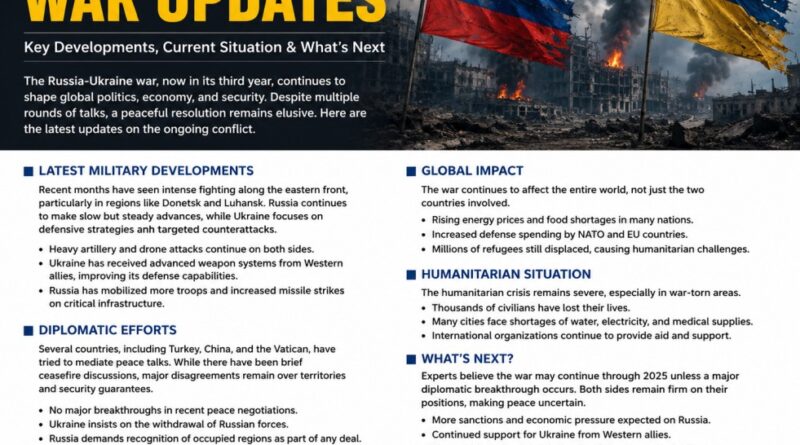
Russia-Ukraine War Updates
The Russia-Ukraine war continues to remain one of the most significant global conflicts in recent years, affecting millions of people and influencing international politics, economies, and security systems worldwide. Since the conflict escalated in 2022, both nations have experienced severe military losses, economic pressure, and humanitarian crises. Even in 2026, the war remains a major topic of discussion across news platforms and social media.
In recent months, fighting has intensified in eastern and southern regions of Ukraine. Russian forces have continued missile and drone attacks targeting key infrastructure, including power stations, transportation systems, and military bases. Ukraine, on the other hand, has strengthened its defense systems with support from Western allies such as the United States and European countries. Advanced weapons, air defense systems, and military aid packages have helped Ukraine resist further territorial losses.
One of the biggest concerns surrounding the conflict is its impact on civilians. Thousands of families have been displaced from their homes, while many cities continue to face shortages of electricity, clean water, and medical supplies. Humanitarian organizations are actively providing aid, but the situation remains extremely challenging in war-affected areas. Refugee numbers also continue to rise as people seek safety in neighboring countries.
The war has also created major economic consequences around the world. Global fuel prices increased sharply due to disruptions in oil and gas supplies, especially across Europe. Food prices also surged because both Russia and Ukraine are major exporters of wheat, grains, and fertilizers. Many countries experienced inflation and rising living costs as a result of the ongoing conflict.
Diplomatic efforts to end the war have continued, but achieving peace remains difficult. Several countries, including Turkey, China, and members of the United Nations, have attempted to mediate peace talks between Russia and Ukraine. However, disagreements over occupied territories, security guarantees, and military withdrawal continue to prevent a final agreement.
Another major development is the growing role of technology and cyber warfare in the conflict. Drone warfare, satellite intelligence, and cyber attacks have become critical tools used by both sides. Experts believe this war is reshaping modern military strategies and influencing how future wars may be fought globally.
The international community remains divided on certain aspects of the war, but many nations continue to support Ukraine politically and financially. Economic sanctions against Russia are still in place, targeting banking systems, trade, and energy exports. Despite these measures, Russia has continued military operations while strengthening partnerships with some allied nations.
Looking ahead, analysts believe the conflict may continue unless both sides agree to serious negotiations. The possibility of escalation remains a concern for global leaders due to fears of wider regional instability. While hopes for peace still exist, the Russia-Ukraine war continues to shape the future of international relations, energy markets, and global security.